

Why Strong Glutes Matter for Strength, Balance, and Everyday Movement
When people think about glute training, they often think only about appearance.
But your glutes do much more than shape your lower body.
They play an important role in how you walk, run, squat, climb stairs, lift, balance, and produce power.
Strong glutes can support better movement, improve lower-body strength, and help your body work more efficiently during both workouts and everyday activities.
That is why glute training should not be treated as an optional extra.
It can be an important part of a well-rounded strength program.
Here is why strong glutes matter.
What Are the Glute Muscles?
Your glutes are made up of three main muscles:
- Gluteus maximus
- Gluteus medius
- Gluteus minimus
Each one plays a different role in movement.
The gluteus maximus is the largest muscle and contributes heavily to hip extension, power, and lower-body strength.
The gluteus medius and minimus help stabilize the pelvis and support side-to-side movement and balance.
Together, these muscles help control the hips and lower body during a wide range of movements.
1. Strong Glutes Support Lower-Body Strength
Your glutes are involved in many major strength exercises.
Squats, lunges, deadlifts, step-ups, hip thrusts, and split squats all rely on the glutes to help generate force and control movement.
When the glutes are strong, they can contribute more effectively during lower-body exercises.
This can make movements feel more stable and powerful.
Instead of relying too heavily on other muscles, your body can distribute the work more efficiently.
2. Glute Strength Supports Better Balance
Balance depends on more than just your feet.
Your hips play a major role in keeping your body stable.
The gluteus medius and other hip muscles help control the pelvis when you stand on one leg, walk, run, or change direction.
This becomes especially important during movements such as:
- Step-ups
- Lunges
- Single-leg exercises
- Running
- Walking upstairs
- Changing direction
Improving hip and glute strength can help you feel more controlled during these movements.
3. Strong Glutes Help With Everyday Movement
Your glutes are active throughout daily life.
Every time you stand up from a chair, climb stairs, bend down, or walk uphill, your glutes contribute to the movement.
That means glute training is not only useful for athletes.
It can also support everyday physical ability.
For example, stronger glutes can help with:
- Standing up from a seated position
- Carrying objects
- Walking longer distances
- Climbing stairs
- Getting in and out of a car
- Moving with more stability
Fitness becomes more valuable when it makes everyday movement easier.
4. Glutes Help Generate Power
Powerful movement often begins at the hips.
The glutes help produce force during activities such as sprinting, jumping, swinging, throwing, and changing direction.
That makes them especially important for athletic performance.
Golfers, baseball players, runners, and other athletes all rely on hip strength to help transfer power through the body.
Even if you are not training for a sport, improving your ability to generate force can make many strength exercises feel stronger and more controlled.
5. Glute Training Can Improve Hip Stability
Your hips need to remain stable while your legs move.
Without good control around the hips, movements can become less efficient.
Glute exercises can help develop the muscles that support and stabilize the pelvis.
This becomes particularly important during single-leg movements.
When performing a step-up or split squat, for example, your hip muscles help prevent unnecessary movement and keep your lower body aligned.
Better control can make training feel more confident and precise.
6. Strong Glutes Support Better Squatting and Lifting
Many people want to improve their squat or deadlift.
Glute strength can play an important role in both.
During a squat, the glutes help drive the hips upward as you return to standing.
During a deadlift, they contribute to extending the hips and finishing the movement.
If the glutes are not contributing effectively, other areas may end up doing more work.
Training the glutes directly can support stronger and more coordinated lower-body movement.
7. Glute Training Is About More Than One Exercise
Glute training is often associated with hip thrusts.
While hip thrusts can be useful, they are only one option.
A well-rounded glute program may include different movement patterns such as:
Hip Extension
Examples:
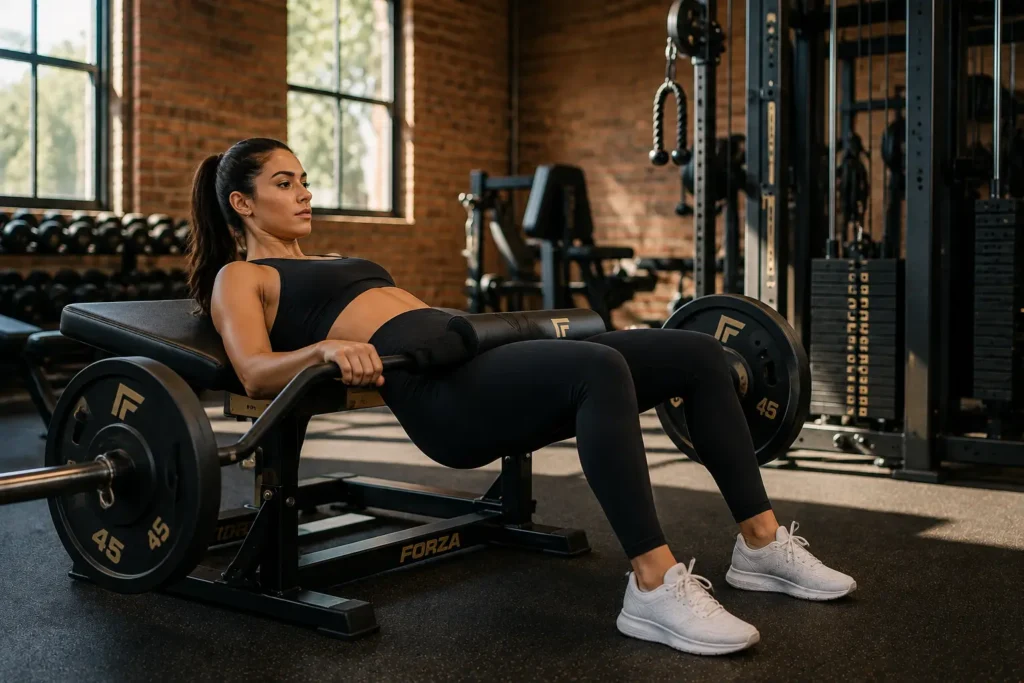
- Hip thrusts
- Glute bridges
- Romanian deadlifts
Squatting Patterns
Examples:
- Squats
- Goblet squats
- Split squats
Single-Leg Training
Examples:
- Step-ups
- Reverse lunges
- Bulgarian split squats
Hip Abduction
Examples:
- Band walks
- Cable abductions
- Side-lying movements
Using different exercises helps train the glutes through different positions and movement patterns.
8. Progressive Training Matters
Doing the same glute workout with the same resistance forever will eventually become less challenging.
Your muscles adapt.
To continue building strength, training needs to progress over time.
That progression can come from:
- Increasing resistance
- Adding repetitions
- Improving exercise control
- Increasing range of motion
- Using more challenging variations
- Increasing training volume
Progress does not always mean lifting the heaviest possible weight.
Better technique and control are also forms of improvement.
9. Technique Is More Important Than Chasing Heavy Weight
A heavier exercise is not automatically a better exercise.
If you increase resistance but lose control or change the movement completely, the intended muscles may not be doing the work effectively.
For glute training, it is important to pay attention to:
- Foot position
- Hip movement
- Range of motion
- Tempo
- Balance
- Control
Good technique helps make each repetition more purposeful.
It also allows progression to happen gradually instead of rushing to heavier resistance too soon.
10. Glute Training Can Benefit Different Fitness Levels
You do not need to be an advanced lifter to train your glutes.
Beginners can start with simple bodyweight or lightly loaded exercises.
As strength and confidence improve, resistance and exercise complexity can gradually increase.
A beginner may start with:
- Glute bridges
- Bodyweight squats
- Step-ups
- Supported lunges
A more experienced person may progress to:
- Weighted hip thrusts
- Romanian deadlifts
- Bulgarian split squats
- Cable exercises
- Heavier squatting patterns
The right exercise depends on the individual.
Glute Training for Sports Performance
Strong glutes can also support athletic movement.
Athletes rely on the hips for acceleration, rotation, balance, and force production.
For example:
Golf
Hip strength can support rotation and stability during the swing.
Baseball
The lower body helps generate force during hitting, throwing, and sprinting.
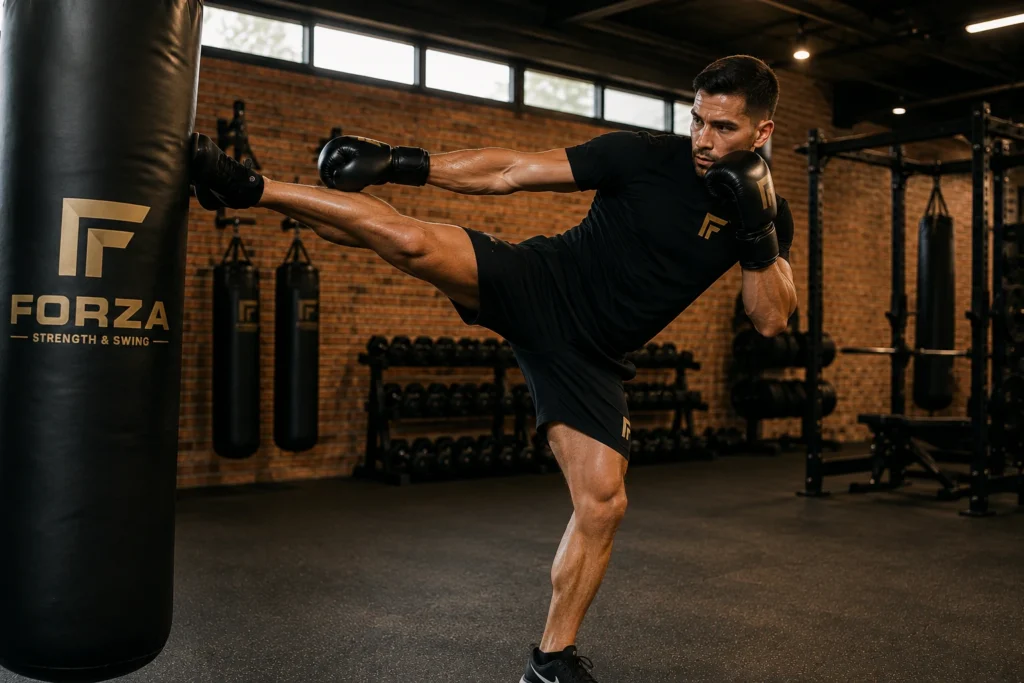
Kickboxing
Kicks and rotational movements rely heavily on hip strength and control.
Running
The glutes contribute to hip extension and help stabilize the pelvis while moving.
That is why glute training can complement many different types of sports and fitness programs.
How Often Should You Train Your Glutes?
There is no single schedule that works for everyone.
Training frequency depends on factors such as:
- Your goals
- Training experience
- Exercise intensity
- Recovery
- Overall workout program
For many people, glute exercises can be included in multiple lower-body or full-body workouts throughout the week.
The goal is to create enough training stimulus to improve while still allowing appropriate recovery.
Glute Training at FORZA Gym in Mount Kisco
The Glute Building Zone at FORZA Gym in Mount Kisco is designed for focused lower-body and glute training.
The goal is not simply to perform more exercises.
It is to use structured movements that help develop strength, stability, control, and confidence.
Whether your goal is to improve lower-body strength, support athletic performance, or simply feel stronger during everyday movement, focused glute training can become an important part of your overall fitness routine.
Frequently Asked Questions
Are glute exercises only for women?
No.
Glute strength is important for everyone.
The glutes contribute to lifting, running, jumping, balance, sport performance, and everyday movement regardless of gender.
What are the best exercises for glutes?
There is no single best exercise.
Hip thrusts, squats, deadlifts, lunges, step-ups, and hip-abduction movements can all be useful depending on your goals and ability.
Do squats train the glutes?
Yes.
Squats can involve the glutes, especially when performed with appropriate technique and range of motion.
However, combining squats with other hip-extension and single-leg exercises can create a more complete program.
Do I need heavy weights to strengthen my glutes?
Not necessarily.
Resistance should be challenging enough to create progression, but good technique and control should come first.
Beginners can make progress with lighter resistance before gradually increasing difficulty.
Can stronger glutes help with sports?
Yes.
The glutes contribute to power, balance, acceleration, rotation, and lower-body stability, making them relevant to many sports and athletic activities.
Build Strength From the Hips Up
Glute training is about much more than appearance.
Strong glutes support strength, stability, balance, power, and everyday movement.
With consistent and progressive training, you can build a stronger lower body that supports both your workouts and the activities you enjoy outside the gym.
Discover the Glute Building Zone at FORZA Gym in Mount Kisco and start building strength with purpose.
Explore the Glute Building Zone at FORZA Gym.