

Stretching and Pilates are often mentioned together, but they are not the same thing.
Both can help you move with greater control, improve flexibility, and become more aware of how your body moves. However, they approach those goals in different ways.
Stretching primarily focuses on increasing or maintaining the range of motion around your muscles and joints.
Pilates combines controlled movement, core engagement, stability, balance, breathing, and mobility.
For many people, the best approach is not choosing one over the other.
It is understanding how both can support a more complete fitness routine.
Here is what you need to know.
What Is Stretching?
Stretching involves intentionally lengthening muscles and moving joints through comfortable ranges of motion.
It can be performed before training, after training, during a recovery-focused session, or as its own mobility routine.
Common forms include:
Static Stretching
Holding a position for a period of time to gently lengthen a muscle.
Dynamic Stretching
Moving through controlled ranges of motion rather than holding one position.
Mobility Work
Using movement to improve how comfortably and effectively a joint moves through its available range.
Each approach can serve a different purpose depending on when and why you are stretching.
What Is Pilates?
Pilates is a movement-based training method that places a strong emphasis on control.
Exercises often combine:
- Core engagement
- Controlled breathing
- Postural awareness
- Stability
- Balance
- Flexibility
- Coordinated movement
Rather than simply holding a stretch, Pilates asks you to maintain control while moving.
This makes it different from a traditional flexibility routine.
A Pilates exercise may challenge several areas of the body at the same time while requiring you to maintain alignment and deliberate movement.
Stretching vs. Pilates: What Is the Main Difference?
The simplest difference is this:
Stretching primarily works on range of motion and flexibility.
Pilates combines mobility with strength, stability, coordination, and control.
For example, you may perform a stretch to improve flexibility around your hips.
A Pilates movement may ask you to move the hip while keeping your pelvis and core controlled.
Both can be useful.
They simply train the body in different ways.
1. Stretching Can Help Maintain Flexibility
Flexibility refers to the ability of muscles and joints to move through a comfortable range.
Daily habits can influence flexibility.
Sitting for long periods, repetitive movements, and limited physical activity can sometimes make certain movements feel restricted.
Regular stretching gives you time to intentionally move through those ranges.
Areas commonly addressed include:
- Hips
- Hamstrings
- Calves
- Shoulders
- Chest
- Upper back
You do not need extreme flexibility to benefit from stretching.
For most people, the goal is simply to move comfortably and efficiently.
2. Pilates Builds Control Through Movement
Pilates is not only about becoming more flexible.
It also asks you to control your body while moving.
For example, an exercise may require you to move your arms or legs while keeping your torso stable.
That challenges coordination between different muscle groups.
Over time, this type of training can help improve movement awareness.
Instead of simply completing an exercise, you become more aware of:
- Position
- Alignment
- Breathing
- Tempo
- Balance
- Control
That awareness can carry over into other forms of exercise.
3. Pilates Places More Emphasis on the Core
The core is involved in many Pilates exercises.
But core training does not simply mean doing abdominal exercises.
Your core includes muscles that help stabilize your torso and pelvis while you move.
Pilates often challenges these muscles by asking you to maintain control while your arms or legs change position.
This can help develop stability during both exercise and everyday movement.
4. Stretching Can Complement Strength Training
Strength training and stretching do not need to compete with one another.
They can work together.
Strength exercises challenge your muscles under resistance.
Stretching and mobility work can help you spend time moving comfortably through different positions.
For example, someone who strength trains regularly may use mobility work around the:
- Ankles
- Hips
- Thoracic spine
- Shoulders
depending on the demands of their workouts.
The goal is not necessarily to become as flexible as possible.
It is to have enough mobility to perform the movements you want to perform comfortably and with control.
5. Pilates Can Improve Balance and Stability
Many Pilates exercises use slow and controlled movement.
This means you cannot rely only on momentum.
You have to actively stabilize your body.
Some movements may challenge:
- Single-leg balance
- Pelvic stability
- Core control
- Shoulder stability
- Coordination
This can make Pilates a useful complement to strength training and other forms of fitness.
Strong movement is not only about producing force.
Being able to control that force is important too.
6. Both Can Improve Body Awareness
One benefit shared by stretching and Pilates is increased awareness of how your body moves.
During a fast-paced workout, it can be easy to focus only on completing repetitions.
Stretching and Pilates often move at a more deliberate pace.
This gives you more time to notice:
- Where you feel tension
- Which movements feel comfortable
- Where balance is challenging
- How your breathing changes
- Whether one side feels different from the other
This type of awareness can help you become more intentional during other workouts as well.
7. Stretching Can Be Useful After Long Periods of Sitting
Many people spend a significant portion of the day sitting.
Work, commuting, meetings, and screen time can create long periods with very little movement.
A dedicated stretching or mobility session gives you an opportunity to change positions and move areas that may not have been active throughout the day.
Even simple movements for the hips, upper back, and shoulders can provide a useful break from staying in one position for hours.
The goal is not necessarily intense exercise.
Sometimes the body simply benefits from moving.
8. Pilates Can Complement Other FORZA Training
Pilates does not need to replace strength training, kickboxing, golf training, or other activities.
It can complement them.
For example:
Strength Training
Pilates can add additional core control, stability, and mobility work.
Kickboxing
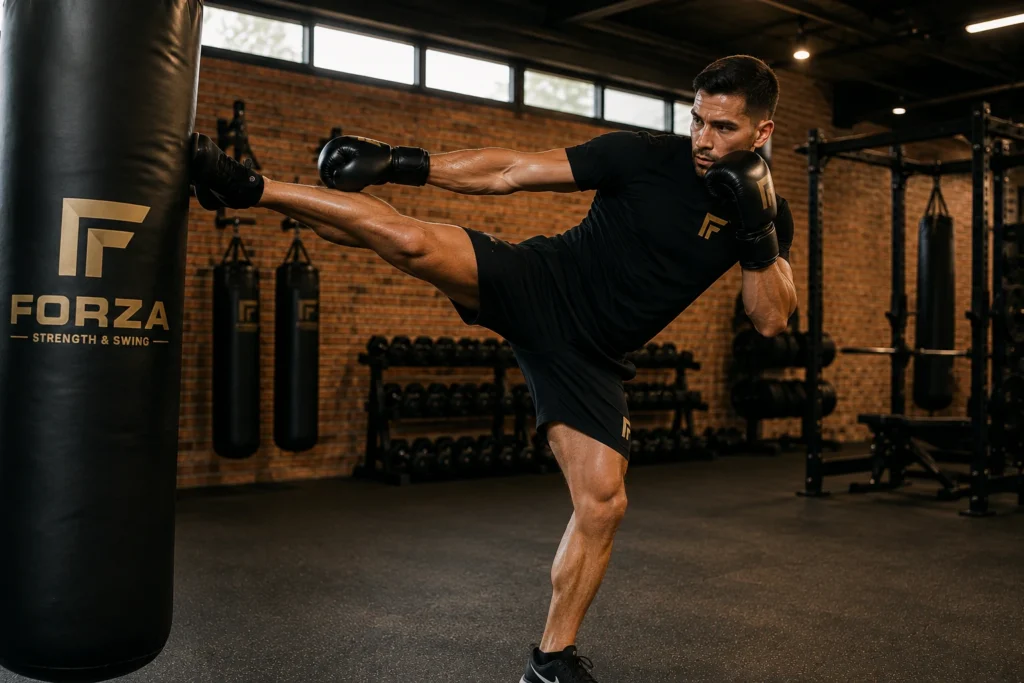
Balance, hip control, and coordinated movement can support kicking and rotational patterns.
Golf
Core control, rotation, balance, and body awareness are important components of the golf swing.
Baseball
Athletes rely on rotational control, balance, and coordinated movement when hitting and throwing.
A well-rounded fitness routine can include different types of training for different purposes.
Should You Stretch Before or After a Workout?
The answer depends on the type of stretching.
Before training, many people benefit from dynamic movements that gradually prepare the body for the exercises ahead.
Examples might include:
- Leg swings
- Arm circles
- Controlled lunges
- Hip mobility movements
- Bodyweight squats
Longer static stretches are often used separately or later in a workout depending on the person’s goals.
The important thing is that your warm-up should prepare you for the activity you are about to perform.
Is Pilates Strength Training?
Pilates can certainly challenge muscular strength and endurance, particularly around the core and stabilizing muscles.
However, it is not identical to traditional resistance training with dumbbells, barbells, machines, or other heavier forms of resistance.
That is why the two can work well together.
Traditional strength training can focus on progressively increasing resistance.
Pilates can place additional emphasis on control, stability, alignment, breathing, and movement quality.
You do not necessarily need to choose between them.
Should You Choose Stretching or Pilates?
It depends on what you want from the session.
Stretching May Be Right for You If:
- You want to focus primarily on flexibility
- You feel stiff after sitting for long periods
- You want dedicated mobility work
- You want a lower-intensity movement session
- You want to complement your current workouts
Pilates May Be Right for You If:
- You want to improve core control
- You want to challenge stability and balance
- You enjoy slow, deliberate movement
- You want to combine mobility with strengthening
- You want to improve overall body awareness
And if several of those goals apply to you, there is no reason you cannot include both.
Why Recovery-Focused Movement Matters
Not every workout needs to be high intensity.
Progress also depends on creating a training routine you can maintain.
Lower-intensity movement sessions can give you an opportunity to focus on areas that may receive less attention during harder workouts.
Mobility, stretching, balance, controlled movement, and breathing can all have a place in a well-rounded fitness program.
The goal is to build a body that is not only stronger, but also capable of moving well.
Stretch Zone & Pilates at FORZA Gym in Mount Kisco
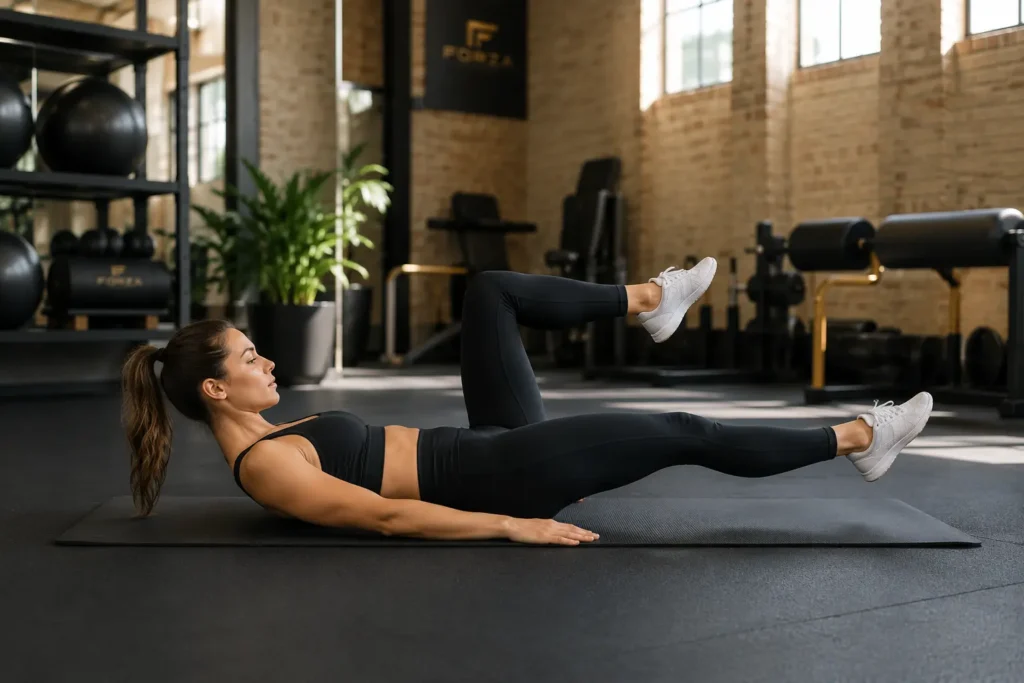
At FORZA Gym in Mount Kisco, the Stretch Zone & Pilates area provides a dedicated space for flexibility, mobility, core control, stability, and recovery-focused movement.
It can complement strength training, kickboxing, golf, batting practice, or your overall fitness routine.
Whether you want to improve flexibility, develop greater control, or simply spend more time moving intentionally, stretching and Pilates offer different tools for building a more balanced approach to fitness.
Frequently Asked Questions
Is Pilates the same as stretching?
No.
Stretching primarily focuses on flexibility and range of motion, while Pilates combines mobility with core engagement, stability, balance, and controlled movement.
Can beginners do Pilates?
Yes.
Many Pilates movements can be modified based on ability and experience, making it accessible to beginners.
Do I need to be flexible before starting Pilates?
No.
You do not need to be highly flexible to begin Pilates. Flexibility and movement quality can develop gradually with consistent practice.
Can I do Pilates and strength training?
Yes.
The two can complement each other well. Strength training develops force and resistance capacity, while Pilates can add additional work for control, mobility, balance, and stability.
Is stretching useful if I already exercise regularly?
Yes.
Regular training does not automatically mean every joint and muscle receives dedicated mobility work. Stretching can be added to a broader fitness routine based on your individual needs.
How often should I stretch?
There is no single schedule that works for everyone. Your activity level, goals, training program, and current mobility can all influence how often stretching is useful.
Build a More Balanced Way to Move
Fitness is not only about how much weight you can lift or how hard you can train.
Flexibility, balance, stability, control, and mobility matter too.
By combining stretching with controlled Pilates-based movement, you can create a more complete approach to how your body moves and performs.
Discover the Stretch Zone & Pilates at FORZA Gym in Mount Kisco and make better movement part of your training routine.
Explore Stretch Zone & Pilates at FORZA Gym.